Native Teams B2B
Untangling global payroll and compliance while aligning design system governance across engineering teams.
Industry
Global Payroll & EOR
Client
Native Teams
01.
The Problem.
We originally ran one giant platform for everyone, grouping employers, individual employees, and gig workers into a single interface and hoping people would find their way. The result was a massive, cluttered navigation menu where critical actions were buried under endless submenus, leading frustrated users to abandon tasks altogether. To make matters worse, our onboarding was a massive wall. We forced business owners through an exhaustive business verification process upfront before they could even see what the software offered. The visual hierarchy felt overwhelming, full of dense tables and inconsistent patterns across country legal steps. We needed to untangle who the product was actually for, but first we had to fix the onboarding barrier that kept people from ever reaching the core tools.
02.
What I solved.
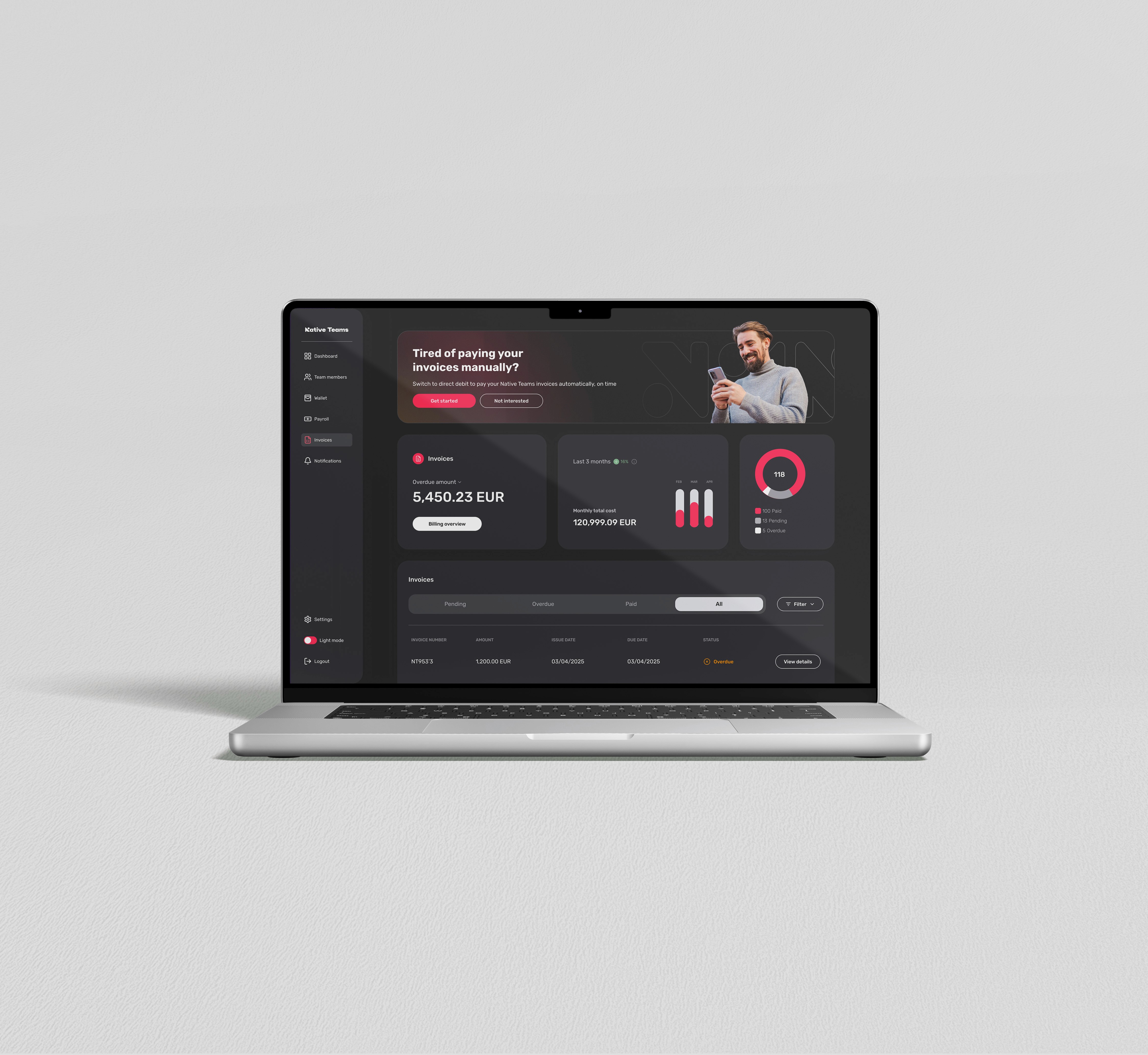
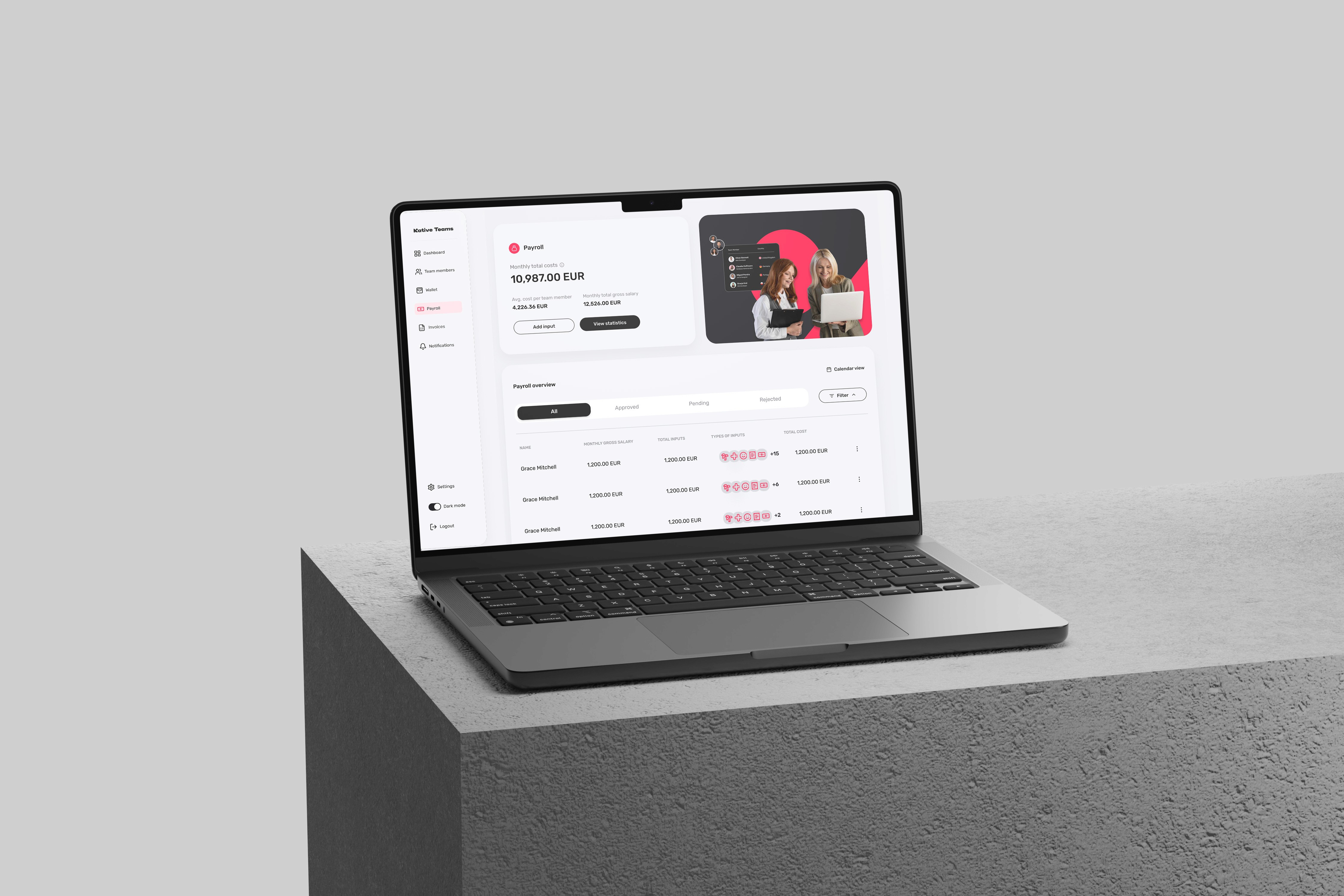
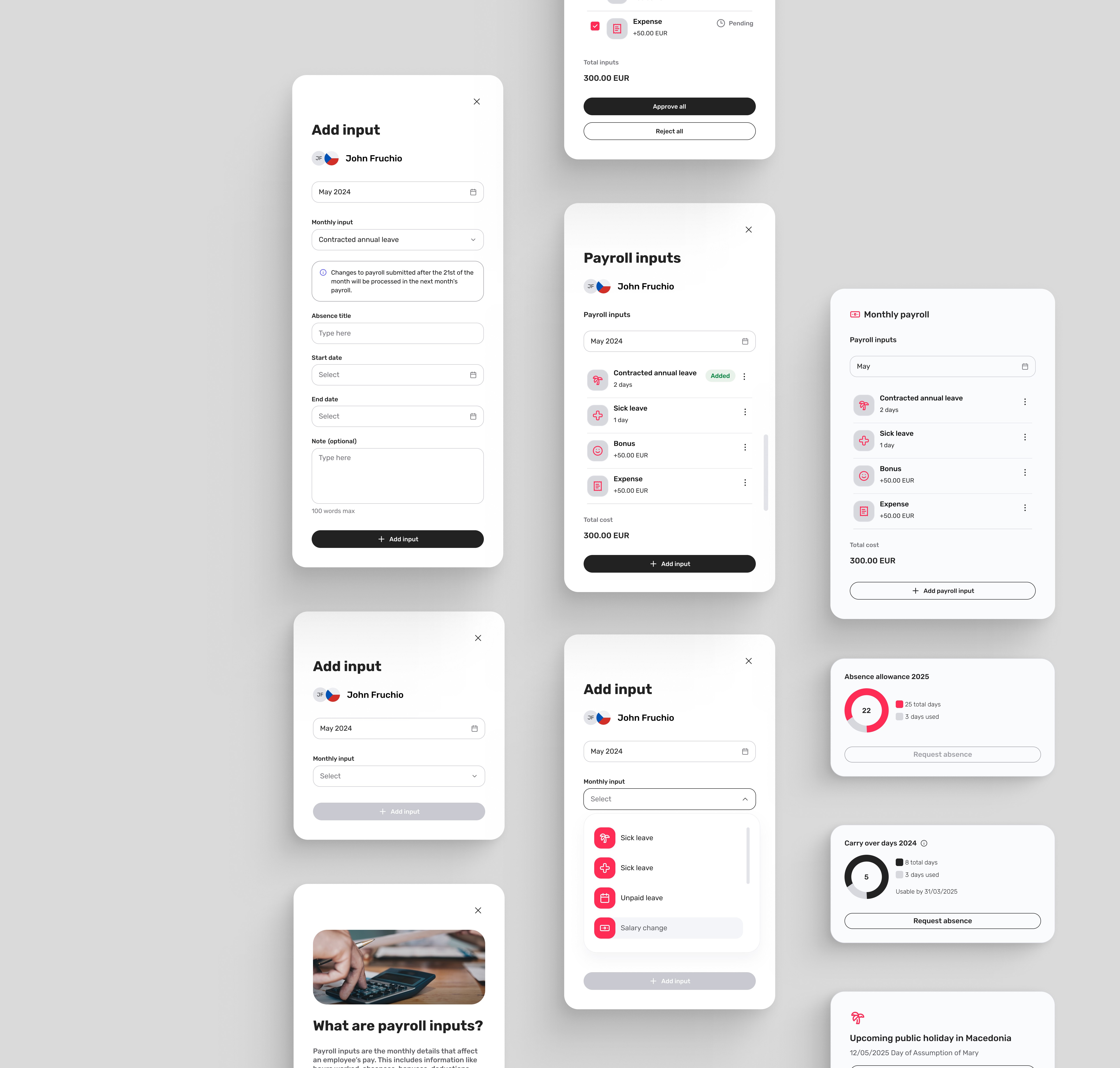
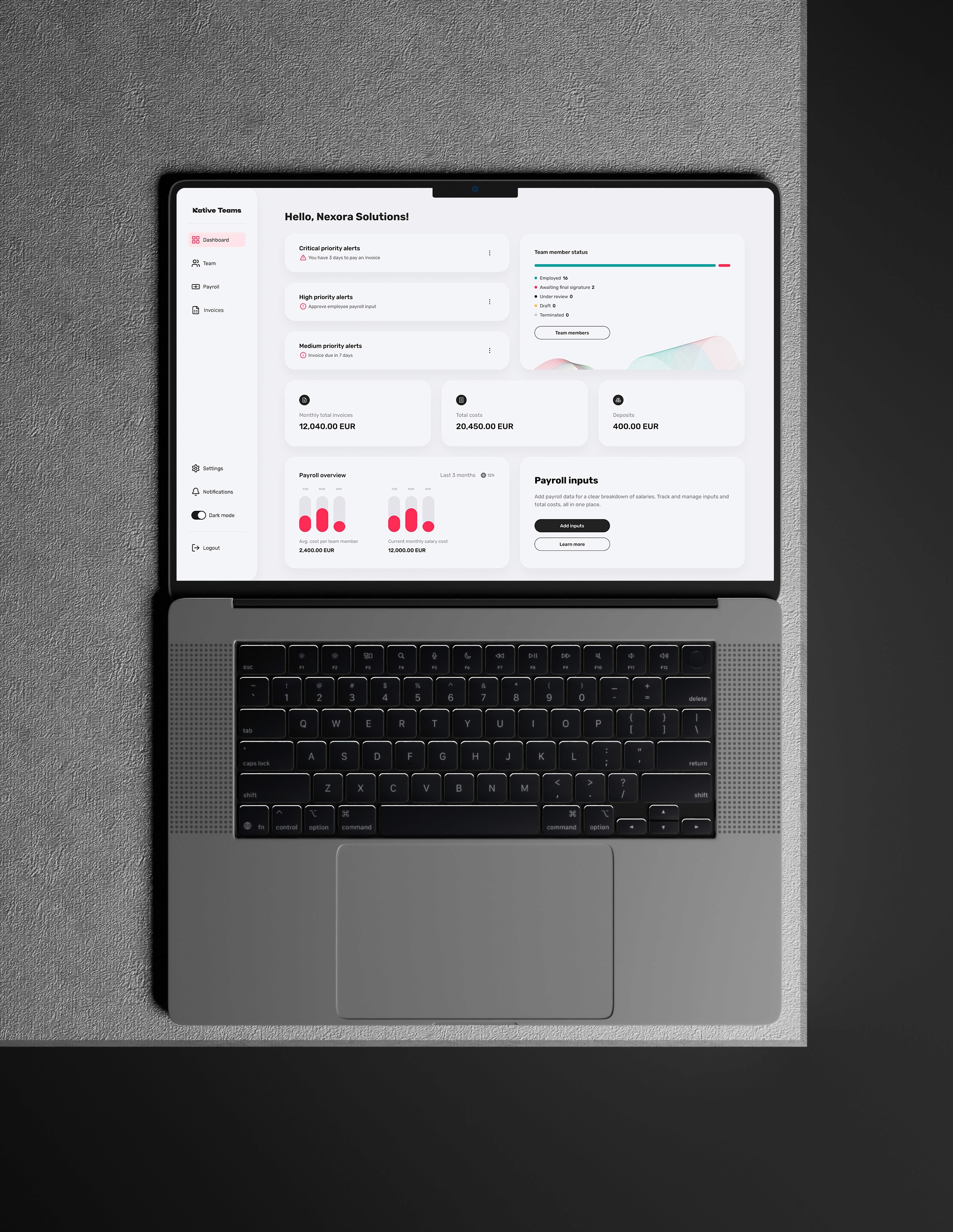
We recognized that one size fits all was failing, so we mapped out and fragmented the platform into dedicated products for each persona: employers, employees, and gig workers. I owned the employer experience from discovery to delivery. I designed a purpose built employer hub tailored specifically for company operations. This meant giving admins clean, frictionless tracks for team management, automated payroll runs, and invoice tracking, while making complex lifecycle actions like onboarding new hires or processing offboarding and terminations clear and fast. To solve the drop off problem, I restructured our onboarding into progressive steps. I stripped away the heavy upfront hurdles so employers could immediately enter the hub and experience the value firsthand. The extensive business compliance and verification requirements were moved into contextual milestones that users could complete naturally as they began hiring and processing payments. Behind the scenes, I formed and ran an internal design taskforce. We met weekly to clean up duplicate components, align our design system rules, and enforce linear A to B file structures in Figma so developers had complete visibility into every verification and payroll state without guessing.
03.
Outcome.
Separating the employer experience from the general platform and letting users see the actual workspace before completing full verification changed everything. Onboarding abandonment dropped by roughly a third within the first quarter, while signup completion climbed. Giving companies dedicated tracks for payroll, invoicing, and team lifecycle management significantly eased the load on customer support, leading to a noticeable drop in account setup and compliance escalations. Meanwhile, the shared component system and standardized Figma handoffs cut design QA churn roughly in half, giving engineering the clarity to ship major compliance updates on schedule.